
CES Redux: 3 Takeaways from CES
Ultra-thin Laptops! Flat Screen HDTVs! Booth Babes! Thumb Drives! Tchotchke’s!
Here are three key trends emerging from CES that have implications for brand, marketers and agencies in 2012 and beyond.
Microsoft: The Sleeping Midget Appears To Be Stirring
“The company’s “Metro” tile interface — which will stretch across Windows Phone, Xbox Live and Windows 8 — is fresh and elegant and might just cause a few people to rethink their views about the “evil empire.”
People don’t really say Microsoft anymore. They say Xbox, they say kinect, they say Outlook and PowerPoint. But in 2012 people will start saying Microsoft again. After years of debacles, such as Vista, Kin and MSN search, Microsoft is coming back in a big way:
- Xbox Kinect is the fastest selling consumer gadget of all time
- Microsoft/BING is now No. 2 in Web search
- Windows Phone now has 50,000 applications, an impressive flagship smartphone from Nokia Oyj
So, now armed with Xbox, a revamped mobile division, a reliable search engine and Windows 8 on the horizon, it’s starting to look like Microsoft might be interesting and relevant again. Clearly the pressure by Google and Apple has forced Microsoft to rethink its brand and product strategy. Will it pay off?
Key implications:
More mobile fragmentation: In 2012 we’ll need to start adding Windows to the di-umpherate of Apple and Google when we talk about mobile activations
More movement towards a unified OS across touch-points. Google has one, Apple has one. Now Microsoft will have one. In the near future we’ll be able to move seamlessly from one device to the next en masse.
The CES of PR
“No matter how exciting the technology, what really caught our eye is how companies are using digital communications and building their own channels of content to win, persuade, enlighten, and engage on the showroom floor”
Be The Media: CES is a treasure trove of content for our clients. Texas Instruments is one brand that took advantage of the platform by shooting video of the show, visiting partner booths to showcase how leading companies are using TI technology, and interviewing attendees. This kind of rich content can support paid, owned and earned platforms.
Bringing Advocates to Life: This year real customers and advocates were brought to the show to talk about their experience using various products. These advocates were talking to media companies, buyers, and other consumers about how a particular technology benefited them.
Key implications:
CES is a media channel, not just an event. And it offers a lot of opportunities for marketers to bolster their content library for redistribution across paid, owned and earned. Advocates not only bring products to life, but they can also do the job of evangelizing products at the show and reporting from the floor across social platforms
Netflix Vs. Cable
“In the face of cable trying to expand its presence beyond the cable box, Netflix might find it hard to ink content deals that are needed to continue fueling its growth.”
Last year Netflix was all over the place. They were the leader in subscription-based services, negotiated strong distribution deals for its streaming platform, and decided to spin-off their streaming service from their DVD service, which lead to horrendous results for the company. Netflix was a company ahead of the curve even with their spin-off nightmare, but they still had (and have) an intriguing product. Even with their limited streaming content selection, they still have something for everyone. And more importantly, they disrupted the broadcast industry and scared them into copying the formula.
At this years CES, we saw the beginnings of how cable companies are going to compete. Comcast, Verizon, and others showed off their new streaming and mobile/TV Anywhere capabilities, such as Comcasts Anyplay TV and their upcoming Xfinity app for the iPad.
Key implications:
While Netflix is still the leader in smarTV streaming content, brands need to develop advertising opportunities on the platform to develop learnings and reach early adopters/affluent audiences now. With Comast and other cable companies exploring with “TV Anywhere” we need to think about we negotiate video buys (and TV buys) to ensure we’re developing learnings and testing new experiences.
Related articles
- CES 2012: Tech takeaways and what we learned in Las Vegas (business.financialpost.com)

Kraft Temptations Vending Machines: Break-Through Sampling Innovation … or Gimmick and Targeting Blunder?
Kraft’s Intel-powered facial-recognition vending machines dispense samples to an adult consumer.
Every marketer is searching for ways to innovate in how customers experience their brands – and to stand out in the ever-evolving landscape of marketing tactics and social conversation.
Recently, Kraft set out to achieve both objectives for Jell-O’s Temptations line of products which have been created as an adult snack rather – in contrast to Jell-O’s association with pre-teen kids.
The CPG giant unveiled test vending machines in selected markets that provide free product samples to passers-by. The machine leverages facial-recognition technology from Intel to identify the age and gender of the potential users, dispensing samples only to its adult target audience – asking any detected children to step away from the machine.
The effort has created a buzz in its use of the latest technology to connect with potential customers in a new way, providing what Ed Kaczmarkek, Kraft’s Director of Innovation and Customer Experiences, called “a big gee-whiz factor… making certain we get the right sample to the right consumer.” Jell-O’s Facebook page calls Temptations “the adult only treat with a taste that’s too indulgent to share with the kids,” and Kraft deserves praise for its unique approach to connecting directly with potential customers. It offers a glimpse into how this technology can be used in the future to better identify and connect with a brand’s audience.
However, much of the coverage of Jell-O’s efforts focuses not on how it is connecting with its design target, but how it is actively excluding kids and creating a negative brand experience. Headlines included “Jell-O Tempts Adults (Kids Not Allowed) With Intel Face Recognition,” “Ageist Pudding Machine Uses Facial Recognition Technology to Spurn Children” and “Pudding Vending Machine Programmed to Hate Children.” Noted entrepreneur and marketing blogger Seth Godin commented that “it’s a goofy gimmick, not a useful innovation.”
It will be interesting to see the ultimate impact that this program has on brand metrics for Temptations – and of course whether it helps to drive sales. The food and beverage industry spends over $1 billion annually on product sampling, and this technology could help revolutionize how brands distribute product samples. When combined with social and mobile tools, this technology has the ability to create shareable dynamic experiences for consumers.
Related articles
- Brand Hands Our Samples Using Facial Recognition Vending Machine (simplyzesty.com)
- Vending Machine Dispenses Jell-O, But Only if You’re Old Enough [VIDEO] (mashable.com)
- Jello for Adults Only – What Would Bill Cosby Say? (fellowshipofminds.wordpress.com)
- Scram, Kids: New Vending Machine Dispenses Pudding to Adults Only (newsfeed.time.com)
- Vending Machines: Pudding Vending Machine Programmed to Hate Children (eater.com)
- Adults-only vending machine dispenses Jell-O (news.cnet.com)
- Adults-only vending machine dispenses Jell-O (news.cnet.com)
- Free Sample Vending Machine Doesn’t Serve To Kids (geekologie.com)
- Kraft and Intel Launch “Smart Vending Machines” Using Facial Recognition – Adults Get a Treat But No Kiss Allowed – Video (ducknetweb.blogspot.com)
- no kids allowed vending machine (brandflakesforbreakfast.com)
TRENDS, RESEARCH and DATA SOURCES
(FREE OR ACCESSIBLE AS A DIGITAS EMPLOYEE)
Compiled by Digitas Connections Planning, NY as of 7/2011
Please contact David Roseman (droseman@digitas.com) with any questions or access assistance.
List includes
- Research Companies
- Consulting Companies
- Media Owners
- Agency Research & Blogs
- Statistics & Data
(Download here) Research Resources_Digitas_ConnectionsPlanning
Expanding Store Footprint with Mobile – Turning Waiting Time Into Shopping Time
It’s something that we can all relate to. After a long day and week of work, the last thing you want to do is to fight crowds and wait on lines at the grocery store. Over 10 years ago, companies like PeaPod and Fresh Direct started catering to this sentiment with guaranteed fresh delivery of online purchases. And many grocery stores themselves now offer their customers the option of purchasing their groceries online – often providing offers of steep discounts or free shipping.

But those models still require us to spend our valuable time going through the website to choose our groceries when we could be relaxing and doing something else. Wouldn’t it be great if we could get that time back by embedding shopping into our daily routine – like our commute to and from work?
Home Plus grocery store in Korea – which was looking to expand its market share despite a substantially smaller footprint than the market leader – did just that, by applying their insights into the personality and busy lifestyles of Koreans to bring a virtual grocery store to consumers, and blend in with their everyday lives. They built virtual displays in subway stations where consumers could browse photos of an actual grocery aisle and scan QR codes to add products to their online shopping cart while waiting for their train to arrive. When complete, purchases were delivered straight to the consumer’s home – giving them back their well-earned nights and weekends.
This seamless and practical application of a simple QR code to extend Home Plus’s store presence – without opening additional physical store locations – helped propel Home Plus to number one in online grocery sales in Korea and a close second offline. The virtual stores drove 10,287 mobile visits, a 76% increase in new member registration and 130% increase in online sales.
As the mobile space evolves and smart phone penetration continues its rapid growth, the opportunities for marketers to bring utility directly to their consumers and shorten the path to purchase will only increase. As marketers, we need to seek out ways to enhance consumers’ journeys through the purchase funnel. Mobile technology allows us to transform how we look at traditionally static placements – like subway banners – and bring them to life to truly provide incremental value through dynamic content and engagement.
How else could a virtual retail shelf or product sampling work for your brand? Let us know your thoughts at https://connectorati.wordpress.com/about/
Related articles
- Virtual Grocery Shopping in the Subway [Video] (geeksaresexy.net)
- Korea’s Tesco reinvents grocery shopping with QR-code “stores” (geek.com)
- Grocery store chain mixes high and low tech to increase sales (physorg.com)
- Virtual Grocery Shopping (technologyreview.com)
Return of the Internet Refrigerator
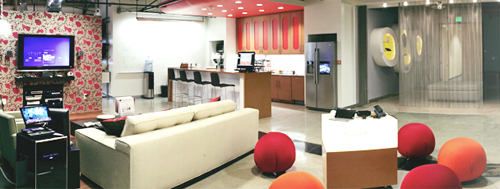
Remember in 2003 when agencies started creating “labs” filled with gear straight out of the Jetsons? It was filled with items such as 30 different versions of cell phones (which were all pretty much the same), Xbox 360’s, netbooks and, yes, even Internet Refrigerators. The purpose was to create an environment that one might find in the near future and ultimately develop insights and useful strategies for leveraging these new technologies for their clients. Well as corny as these seemed in the not too distant past, we’re starting to see these “tween” devices outside of the lab and now in our real-life.
The iPhone was the first real “tween” device to hit the marke and was the first device that not only could do multiple things equally well, but also solved a consumer gap (not to have to carry a blackberry, a cell phone and a laptop around all the time). But iPhone aside there have been some new devices that really push the boundary of convergence, case in point:
APPLE iPAD:
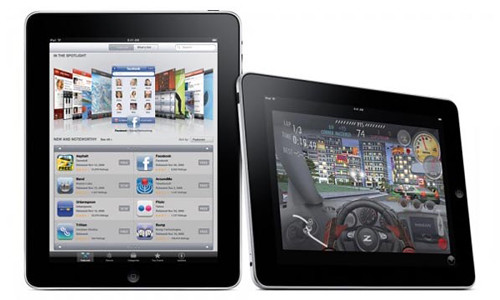
I don’t need to say too much here, but this is the first tablet device that lives up to its promise and opens up opportunities for real innovation in the near future across various industries, such as entertainment, education, healthcare, and communications.
SONY DASH:
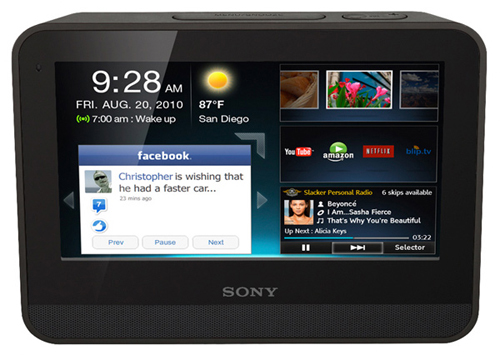
Maybe the coolest alarm clock yet. It connects to your home Wi-Fi network, runs apps, has a seven-inch touchscreen and stereo speakers, snooze button on top doubles as a menu controller, ports on the side accommodate headphones and a USB drive, and a built-in microphone that one day could be used for Skype and other VoIP applications.
It also comes with a viewer for watching streaming Netflix/Amazon.com movies, a feed for Twitter and Facebook updates, and can play your Pandora station when your alarm goes off.
AMAZON KINDLE:
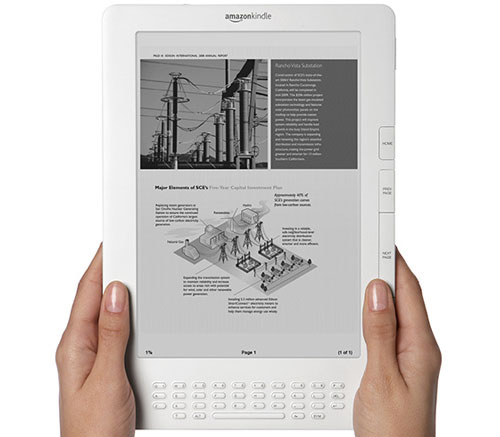
Another one we don’t need to address much, especially after the iPad came out, but still a game changer in principle. The real benefit was to digitize reading and publishing, but the trojan horse was digital newspaper subscriptions sent to you daily via WIFI. The Kindle was poised to be your new reading experience, flush with social capabilities in case you wanted to email a news story or quote from the book you’re reading to a friend.
GM ONSTAR:

Half car, half internet, half personal assistant. GM is making major strides with OnStar and bridging the gap between mobile, internet and driving experience. It just announced a partnership with Google where users can download maps to their car GPS from their smartphone. This is just one innovation happening in the auto industry. There is also the Chevy Volt mobile app where Volt owners can track mileage, turn on their car, unlock their doors and do a host of other functions via their mobile phone.
SO WHAT DOES THIS ALL SUGGEST?
Every surface is a display for information:
All devices can now emit data, be it news or Twitter feeds, songs from Pandora, new items from Amazon, weather reports and possible even telephony via VoIP. We no longer have to accept that only phones, tablets and computers are our source to the internet. Now our car dashboards, alarm clocks, watches, countertops, and more can tap into the web.
Our schema of what computers do will change:
Traditionally computers were our entry way into the web. Now, however, we have other options. So if computers won’t go away, then what will their primary purpose be? Or rather, if we now have multiple ways to connect then where do our computers fall in this dynamic? Instead of being in the center, they are now off to the side. The person is now in the center and depending on what they want to do can select from a variety of devices. If you want to design or crunch numbers then you’ll have to sit with your laptop or desktop. If you’re surfing the web while watching TV or hanging with friends then you’re tablet will do. And if you’re waiting for the bus then your cell phone is perfect.
There will be more reliance on the “Cloud”:
This new dynamic also means consumers will lean more on the “cloud” to access their information. No one wants to have to install iTunes 5 times on all their devices. Instead their songs and other information will follow them from phone to table to alarm clock to laptop and yes to the refrigerator.
Cookies will have to be universal:
Now that consumer will access content from a variety of devices and at different times during the day, how can we ensure that we’re being relevant and not inundating our participant with the same message over and over? The answer is universal cookies. We need a way to sequence messaging from device to device and ensure our web solution is flexible enough to allow for conversion across all devices.
Mobile solutions are no longer an after thought:
Mobile architecture will need to be implemented at the start of the conception and development. Of course there still needs to be heavy reliance on the traditional web for heavy lifting, but at the same time, mobile web development and optimization needs to happen concurrently, not secondarily. This applies to analytics as well.
If you have any additional thoughts or suggestions feel free to let us know at https://connectorati.wordpress.com/about/
Trailer Evolution
Over the past 15 years we’ve seen advances in technology completely change how media is consumed and distributed. In some cases these new consumption and distribution behaviors have eradicated once flourishing forms of media — for example, the music industry. In other cases, we’ve seen new consumption and distribution behaviors enable traditional formats to reach a larger, more qualified, and influential audience, for example, consider the Movie Trailer. Arguably one of the most exciting parts of going to the movies. Whereas Trailers were for the most part exclusively for movies, they are now being used in different ways and by different industries — TV networks, video game publishers, musicians, advertisers and, now, bloggers.
Recently Diddy unleashed an over-the-top trailer for the upcoming debut of his blog, diddyblog.com. It featured sound bites and clips of Obama, Muhammed Ali, MLK, Malcom X, George Clooney, and others talking about overcoming adversity and the challenges of life – a recurring theme for Diddy and one of the main focuses for his blog. By using video he’s exploiting the free distribution model for his blog and setting the expectation that his blog will be different than others – a richer experience and higher production quality. So far his trailer has been generating views and responses, both positive and negative (and you know what they say about PR) as well as anticipation by both his followers and critics.
Click to watch the video:

So what does this say about Diddy and online marketing?
It says that at the end of the day we all process visual information faster than text, and when one expects most blogs to be just that – text – its refreshing and differentiating to see someone take an unexpected approach rather than spread the news via press releases (boring, but, yes, effective). And with video consumption increasing each month (31B video views in March 2010 according to ComScore) and new industries surpassing the Movie Industry in revenue (GTA IV drew in $310M in its first 24 hours whereas SpiderMan 3 drew in $124M in 24 hours) its no surprise to see traditional formats being repurposed. And while Diddy’s blog trailer doesn’t constitute a new trend it will be interesting to see how marketers might use trailers in the future to tease anything from a feature length film to a new twitter feed to a mobile app.
Here’s a really short-list of some trailers that have stood out over the recent years:
Red Dead Redemption Trailer
Gatorade G2 Teaser
If you have any other examples or thoughts, go to https://connectorati.wordpress.com/about/ and let us know.
![Reblog this post [with Zemanta]](https://i0.wp.com/img.zemanta.com/reblog_e.png)
Product placement in the movies … and how much it costs …
This is an interesting look at notable examples of product placement in the movies. Product placement is fully entrenched at all levels of the entertainment industry – did you know for example that the reason James Bond drinks vodka martinis is that Smiroff sponsored Dr No? It often becomes an area of tension and debate between creatives and executive producers.
One producer writes:“On The Rig, we worked out a deal with an energy drink company to feature their products in the film, by showing the roughnecks on the rig using the drinks to stay awake during the long night of the storm. We had a producer on set whose main task was to make sure the label on the drinks could be seen in the shots. It was something that made sense at the time because of our low budget, but over the course of production we realized how distracting and artificial the scenes that included product placement started to feel. Watching them, you’d stop paying attention to the characters and start noticing the energy drinks (the ugly bright colors of the label design didn’t help). We finally made the decision to give the product placement money back and cut around the product shots in the scenes with the drinks. A few still remain, but for the most part it’s no longer noticeable or distracting. The movie is better as a result.”
Oasis – Dig Out Your Soul
Oasis has taken an interesting approach to promoting their latest album, Dig Out Your Soul. We live in a time where many people are willing to pay a few bucks for a bottle of water but prefer to download media files for free. Instead of investing energy and resources in fighting a pre-launch album leak, Oasis embraced the power of new social media and old-fashioned pavement pounding. The band partnered with the city of New York to push its music out to the public by enlisting street performers to learn and perform the new songs all over New York City streets and subways. Not a bad idea, considering that data from the Times Square Alliance estimates that over 1 million pedestrians pass through the Times Square area on an average summer day.
In addition to the street performances, the band gave out free sheet music, lyrics, and encouraged anyone to perform the songs and submit them for upload to the Oasis YouTube channel.
This Oasis campaign kind of reminds me of the way Radiohead took a completely new approach to getting people excited about the release of In Rainbows earlier this year. We’ll see how effective the promo is come the official US release of Dig Out Your Soul on October 7th.
[clearspring_widget title=”Oasis – Dig Out Your Soul” wid=”48ac28a1c0f7f3c3″ pid=”48d858ac00307d31″ width=”300″ height=”523″ domain=”widgets.clearspring.com”]

